

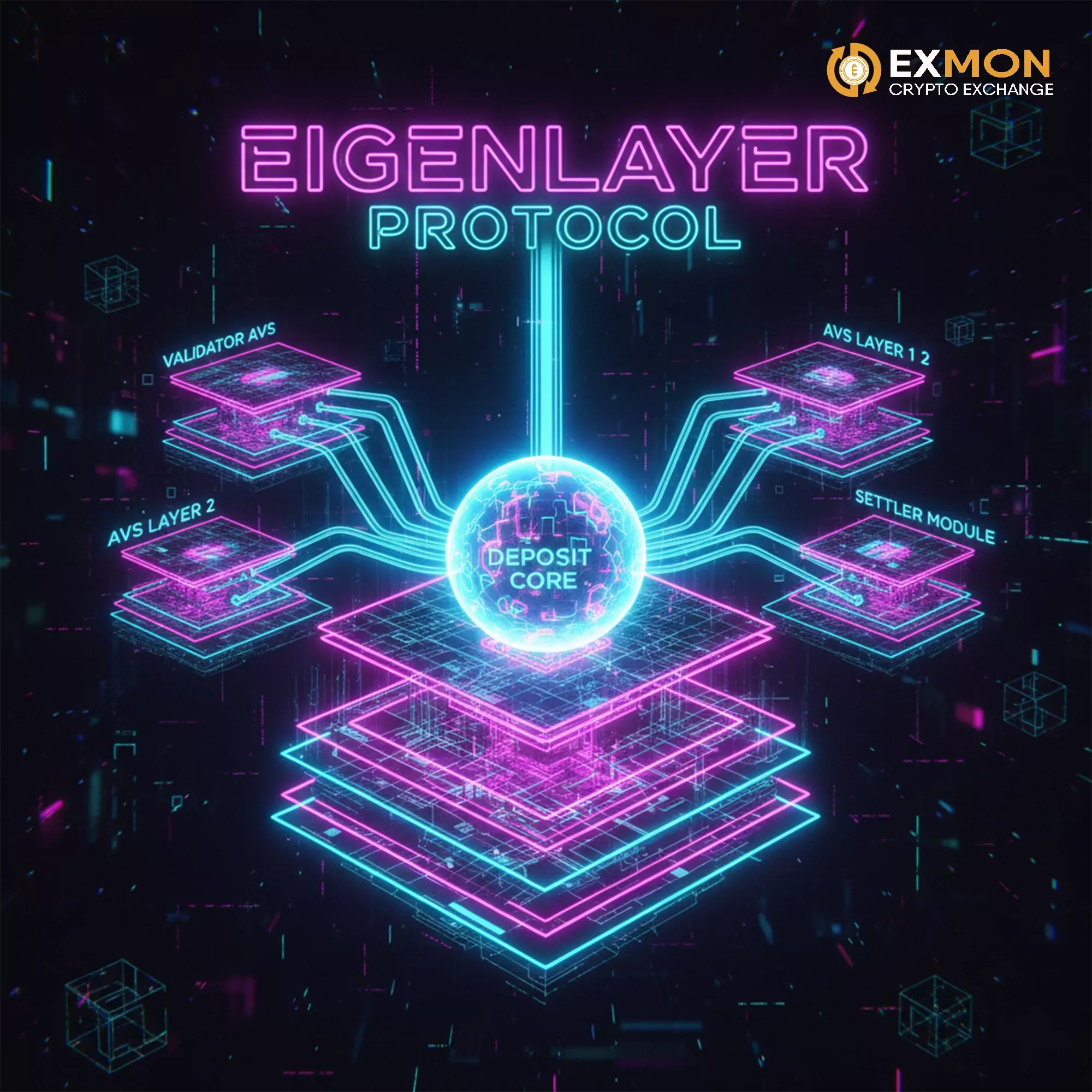
Imagine you put money in a bank deposit at 5% per year. Now imagine the same bank lets you use that same money, without withdrawing it, to vouch for your neighbor's loan and earn an extra 3% on top. Your money is “working” in two places at once, giving you double returns.
In the crypto world, this concept is called restaking. Back in 2024, it shook the market thanks to the EigenLayer project, and by 2026 it became the foundation of a new crypto economy.
What is Restaking? (In Simple Terms)
Normally, when you stake your Ethereum (ETH), you help secure the Ethereum network. In return, you earn a reward (~3-4%). These funds are locked and dedicated to just one task.
Restaking lets you use those already-staked assets to help secure other services: oracles, bridges, new blockchains, or storage networks. These third-party services are called AVS (Actively Validated Services).
What’s in it for you?
- For users: You get the basic Ethereum staking yield plus extra rewards from AVS.
- For new projects: They don’t have to hunt for millions to secure their network—they “rent” security from Ethereum through restaking.
Evolution 2026: From EigenLayer to Multi-Staking
While everything in 2024 revolved around Ethereum, by 2026 the landscape had changed:
- Symbiotic and Karak: Main competitors to EigenLayer. They introduced “Asset-agnostic restaking”. Now you can restake not just ETH, but any ERC-20 tokens, stablecoins (USDC/USDT), and even wrapped Bitcoin (wBTC).
- LRT (Liquid Restaking Tokens): These are “receipts” for your restaking. Protocols like Ether.fi, Renzo, or Puffer take your ETH, restake it, and issue you a token (e.g.,
eETH) that grows in value while staying liquid. You can sell it or use it in DeFi. - Omnichain Restaking: In 2026, restaking went cross-chain. You can stake assets on one network and help secure a protocol on another.
Practical Guide: How to Get Started
For a regular user, there are two main paths:
Option A: Lazy (via LRT)
- Go to a liquid restaking platform (like Ether.fi or Kelp DAO).
- Deposit your ETH or LST (e.g.,
stETHfrom Lido). - In return, you receive an LRT token.
- Result: Your balance accrues Ethereum staking rewards, restaking rewards, and “points” (which may turn into airdrops later).
Option B: Advanced (via EigenLayer/Symbiotic directly)
Here, you choose which operators to delegate to and which AVS to support. This requires understanding the risks of each specific service.
Technical Corner: How It Works Under the Hood
For those who want to understand the mechanics or write their own monitoring bot, interaction with restaking protocols happens through smart contracts.
Here’s an example of how you can check your restaked balance in a hypothetical restaking contract using the ethers.js library:
const { ethers } = require("ethers");
// Contract ABI (simplified)
const restakingAbi = [
  "function getRestakedBalance(address account) view returns (uint256)",
  "function deposit(address token, uint256 amount) external"
];
async function checkBalance() {
  const provider = new ethers.JsonRpcProvider("https://mainnet.infura.io/v3/YOUR_KEY");
  const contractAddress = "0x..."; // Address of EigenLayer or LRT contract
  const contract = new ethers.Contract(contractAddress, restakingAbi, provider);
  const balance = await contract.getRestakedBalance("YOUR_WALLET_ADDRESS");
  console.log(`Your restaking balance: ${ethers.formatEther(balance)} ETH`);
}
Risks: Free Cheese?
Restaking is not just double rewards—it’s also double risk.
- Slashing: If the operator you entrusted your ETH to behaves badly, part of your funds may be confiscated. In restaking, you can be penalized twice: once on Ethereum, and once on the AVS network.
- Smart contract risk: Your money sits in a complex contract system. Any bug at any layer can lead to loss of funds.
- Liquidity risk: During market panic, LRT tokens may trade below the value of the underlying ETH (price decoupling).
Little-known fact: In 2026, “Slashing Insurance” appeared. Some protocols automatically allocate 0.5% of rewards to an insurance fund to cover potential user losses. When picking a platform, always check if such a fund exists.
Yield-Maximization Strategies: The DeFi "Layer Cake"
In 2026, pros don’t just hold LRT tokens in their wallets. They use them as collateral across other protocols. This is called Recursive Staking, or the "Yield Loop."
Example of a Yield Loop:
- You deposit 10 ETH into Ether.fi and receive 10
eETH. (Yield: ~7% with restaking.) - You go to a lending protocol (like Aave or Morpho) and put your
eETHup as collateral. - Against your
eETHcollateral, you borrow regular ETH (usually at a lower rate than theeETHyield). - You use the borrowed ETH to buy more
eETH. - Result: Your effective ETH exposure increases, and yields can reach 15–20% annually.
Warning: this strategy is extremely risky during sharp market swings (liquidation risk).
Little-Known Details: VAVS and Shared Security
Things rarely mentioned in standard overviews:
- VAVS (Vertical Actively Validated Services): In 2026, services emerged that specialize in validating specific types of data. For instance, AVS verify only the correctness of AI models operating off-chain. Restaking became the fuel for decentralized AI (DeAI).
- Two-Token Security Model: Some new networks use a combination of their native token and restaked ETH for security. This makes them resilient to their token’s price dump: even if their coin drops 90%, the network’s security remains supported by the "rented" ETH.
- MEV in Restaking: Operators can now optimize the extraction of Maximum Extractable Value (MEV) across multiple networks simultaneously. Part of this extra profit is shared with restakers.
Practical Code Example: Monitoring "Points" and Yield
Many protocols use a points system. For serious multi-protocol analysis, you can use Python with public APIs (or indexers like The Graph).
import requests

def get_lrt_stats(protocol_name):
    # Example request to an analytics aggregator API or subgraph
    url = f"https://api.restaking-stats.io/v1/protocol/{protocol_name}"
    response = requests.get(url)

    if response.status_code == 200:
        data = response.json()
        tvl = data['total_value_locked']
        apy = data['current_apy']
        points_multiplier = data['points_multiplier']

        print(f"Protocol: {protocol_name.upper()}")
        print(f"TVL: ${tvl:,.2f}")
        print(f"Current Yield (APY): {apy}%")
        print(f"Points Multiplier: x{points_multiplier}")
    else:
        print("Error fetching data")

# Check a popular protocol
get_lrt_stats("etherfi")
Checklist: How to Pick a Restaking Protocol in 2026
If you want to jump on this trend, run the project through these criteria:
- Audits: At least two audits from top firms (e.g., Sigma Prime or OpenZeppelin).
- Unstaking Period: Some protocols require 7–14 days. Make sure you won’t need the funds urgently.
- Operator Reputation: Check who runs the nodes. If it’s big validators like Coinbase Cloud or Figment, slash risk is lower.
- DeFi Integration: How easy is it to sell your LRT token on decentralized exchanges (Uniswap/Curve)? Is there liquidity?
Conclusion: The Future of Restaking
Restaking has turned Ethereum from a simple blockchain into a "Global Trust Layer". We moved from a model where every project builds its own fortress from scratch to one where everyone rents access to a shared super-fortress.
For a "newbie" in 2026, this means one simple thing: just holding ETH in your wallet is no longer economically optimal. Liquid restaking became the new standard of asset ownership, giving access to yields previously reserved for large institutional players.
Main Advice: Don’t put all your eggs in one basket. Split your capital across different LRT protocols and architectures (EigenLayer, Symbiotic, Karak) to minimize systemic risk.
That’s it! Drop your questions in the comments if you have any. :)
Summarize this blog post with: