
Just 5–7 years ago, identity verification on a crypto exchange was basic: passport, selfie, sometimes proof of address.
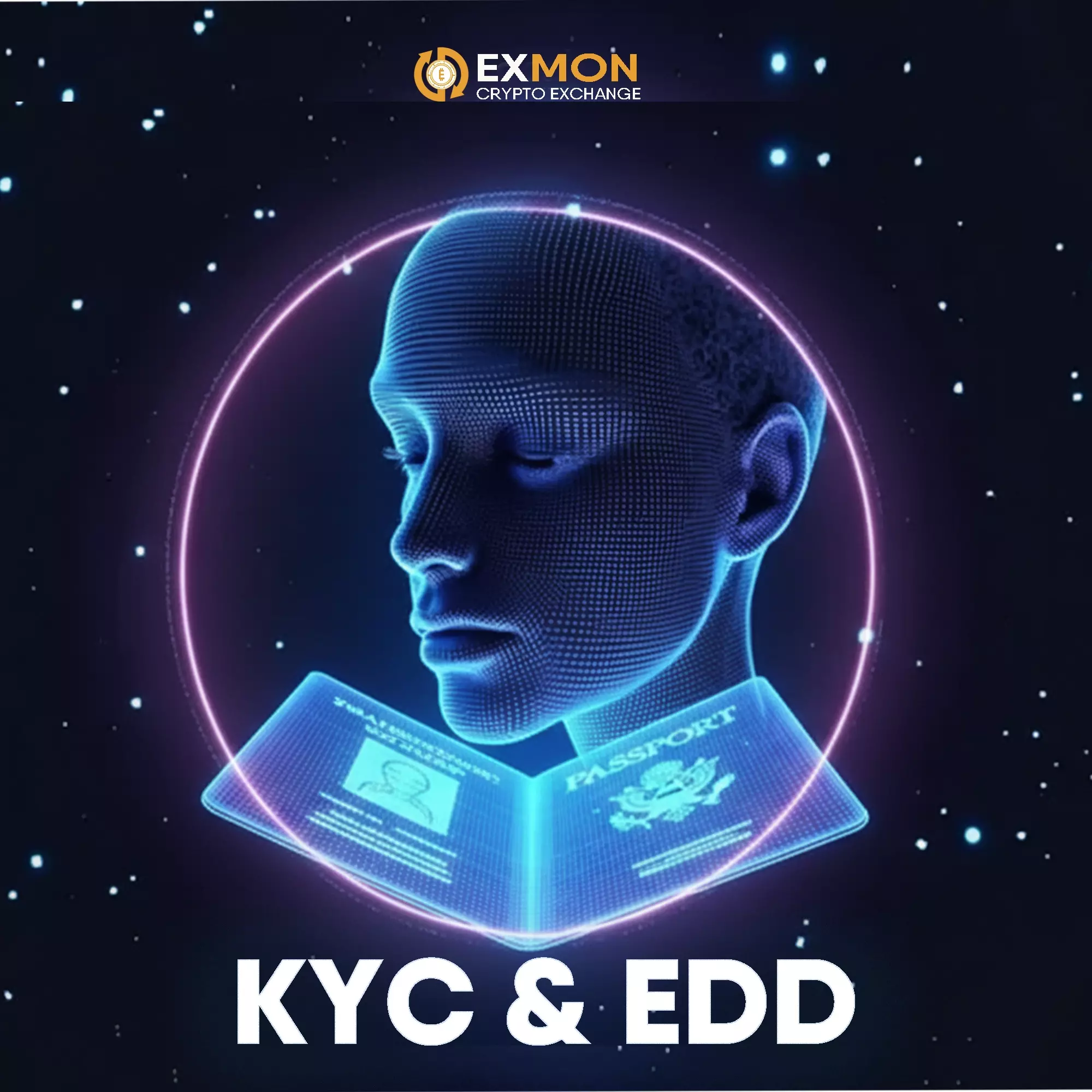
In 2026, Enhanced Due Diligence (EDD) is no longer just "verification," but a full financial dossier comparable to what private banks compile for HNWI clients.
The key point to understand:
EDD is not about suspicion of crime. It is about suspicion of insufficient transparency.
For compliance teams, these are different matters, but the consequences can be equally severe.
Below is a breakdown of what exactly is checked, why, and which nuances are almost never explained to users—but I will clarify.
1. Source of Funds (SoF): the origin of specific money, not "your income in general"
Source of Funds answers the question:
Where exactly did the money for this specific transaction or deposit come from?
A common user mistake is trying to prove their overall income level, when the exchange cares about the specific money trail.
If you are an employee
The required documents typically include:
- income certificate (local equivalent);
- bank statement showing:
- regularity of deposits,
- correlation between income and deposit amounts,
- absence of sudden "anomalies."
❗ Little-known fact:
If your deposit is 3–5 times higher than your average monthly income, even with a legal salary, a deeper analysis is triggered.
If you are an entrepreneur
The exchange is not checking "whether you have a business," but whether it is active:
- tax declarations (personal and corporate);
- company account statements;
- audited reports (if available).
💡 Internal compliance note:
If the company has turnover but dividends were never paid to the user, the money is considered retained and requires a separate explanation.
If you are an investor
Simply saying "I sold an asset" is not enough:
- sale agreement;
- bank confirmation of receipt;
- timing link between the sale and deposit to the exchange.
A gap of more than 6–12 months almost always triggers additional questions.
2. Source of Wealth (SoW): how you accumulated capital over your life
Source of Wealth is no longer about a single transaction, but about your financial biography.
The exchange seeks to answer:
Does it make sense that this person could have this level of wealth at all?
Inheritance
Required documents:
- certificate of inheritance;
- sometimes documents showing the origin of the benefactor's funds.
Yes, they check more than just you.
Gifting
Required:
- notarized gift agreement;
- donor's SoF.
❗ Practical nuance:
If the donor is a relative without official income, the chain almost always "breaks."
Business sale
A contract alone is insufficient:
- documents confirming capital exit;
- dividend history;
- tax confirmations.
3. Crypto Lineage: the pedigree of your cryptocurrency
In 2026, saying "I bought crypto a long time ago" has no value.
Exchanges analyze the full transaction history of assets.
Purchase on other exchanges
Required:
- screenshots or trade exports;
- CSV/PDF with the exchange logo;
- proof of purchase with fiat, not another crypto.
On-chain analysis
Tools used:
- Chainalysis;
- Elliptic;
- TRM Labs.
Any interaction with:
- mixers (Tornado Cash and analogs),
- privacy protocols without a clear purpose,
- "tainted" clusters
→ almost guaranteed rejection.
💡 Rarely stated fact:
Even "clean" crypto can be rejected if you cannot document why you used a specific transaction path.
Mining
Required:
- equipment receipts;
- electricity bills;
- pool logs with payout addresses.
Without these, mining is considered unverified origin.
4. Proof of Address (PoA): where you actually live
Passport with registration is a weak argument for international compliance.
Priority:
- utility bills (≤ 3 months);
- bank statements showing address;
- government correspondence.
❗ The address must match:
- in documents;
- in IP geolocation;
- in account history.
5. Behavioral and social scoring
This is the most underestimated block.
Liveness Check
Video with actions:
- head movement;
- reading characters;
- spontaneous commands.
Purpose – protection against:
- deepfakes;
- imposters;
- stolen identity.
PEPs and connections
Checked:
- you;
- relatives;
- business partners.
Even indirect connections can raise the risk profile.
Geolocation
Analyzed:
- IP addresses;
- frequency of country changes;
- mismatches with documents.
VPN itself is not prohibited, but constant geo-chaos is a red flag.
Summary: what to prepare in advance
| Data Type | Reference Document | Validity Period |
|---|---|---|
| Salary | Income certificate + statement | ≤ 3 months |
| Business | Tax declaration | 1 year |
| Crypto | Transaction history (CSV/PDF) | Entire history |
| Address | Utility bill / statement | ≤ 3 months |
Key takeaway
EDD is not a form of pressure, but a default rejection mechanism if you cannot:
- reconstruct the money trail;
- prove the logic of your financial path;
- explain behavior, not just provide documents.
The exchange is not seeking the truth.
It seeks sufficient evidence to mitigate regulatory risk.
Why EDD Fails Even “Clean” Users Most of the Time
Over years of working with compliance teams, I have seen dozens of cases where completely legitimate funds led to account blocks. The reason is almost always the same — a structural gap in the evidence.
Let's break down the key failure points that exchanges rarely disclose publicly.
6. Logical Gaps: Where EDD Most Often “Breaks”
1️⃣ Funds exist, but the trail does not
The classic scenario:
- income is verified;
- the amount is reasonable;
- but it is impossible to reconstruct the fund’s route.
Example:
Salary → cash → crypto via P2P → exchange.
Ultimately — the crypto is “clean,” but cash is a black hole for compliance.
For an algorithm, it looks like this:
Source of funds cannot be traced → risk cannot be mitigated → rejection.
2️⃣ Crypto older than the exchange
One of the most painful cases for “old-school” crypto users.
If the asset:
- was purchased between 2013–2017;
- the original exchange no longer exists;
- transaction history is lost;
even a perfectly clean on-chain history may not help.
💡 Internal compliance principle:
Absence of data = presence of risk
3️⃣ “I just held it” — a poor explanation
Long-term holding without activity:
- no trading;
- no source verification;
- no intermediate confirmations;
is perceived as unverifiable origin, especially for large amounts.
7. EDD Automation: Why You Are Talking to a Machine
In 2026, the initial EDD decision:
- is made by a machine;
- follows a scoring model;
- with minimal officer involvement.
Humans are only involved if the risk profile is borderline.
What this means in practice:
- emails with questions appear “template-like”;
- additional documents may be requested even after a full package is submitted;
- the logic behind the requests is not explained.
This is not chaos; this is legal risk optimization.
8. Why “Rejection Without Explanation” Is Normal, Not Exceptional
Exchanges are not required to:
- disclose evaluation criteria;
- explain which point failed;
- give a chance to “prove it further.”
The reason is simple:
Any explanation = revealing methodology = regulatory risk.
That is why the wording is almost always the same:
- insufficient information;
- unable to mitigate risk;
- business decision.
9. Can You Prepare for EDD in Advance? Yes, But Not How You Think
❌ What Does Not Work
- “I’ll gather documents when asked”
- “If needed, I’ll explain verbally”
- “As long as the money is legitimate, that’s enough”
✅ What Actually Works
- Financial chronology
- chronological file: years → income → major events;
- no emotions, only facts and documents.
- Unified version of the story
- SoF must not contradict SoW;
- on-chain matches off-chain;
- geolocation matches documents.
- Archiving
- exports from exchanges;
- PDFs with logos;
- backup copies of old accounts.
10. Unpopular but Honest Truth
EDD is not about fairness.
Nor is it about the presumption of innocence.
It is about the question:
Can we legally prove to the regulator that the risk is acceptable?
If the answer is “no,” you get blocked, even if:
- you did not break the law;
- you are right;
- the funds are completely legitimate.
Final Takeaway
In 2026, a crypto exchange is:
- not a platform;
- not a service;
- not a partner.
It is a regulated financial gateway that:
- selects minimal risk;
- acts in its own interest;
- is not obliged to “understand your situation.”
If you deal with large sums, EDD is not an event, but a permanent state that you must be prepared for in advance.
It is not the document that matters.
It is not the truth that matters.
What matters is the ability to prove it.
Summarize this blog post with: