


Trading on L2 networks (Arbitrum, Optimism, Base, zkSync) is the Wild West of modern DeFi. While institutional players fight for microseconds on Ethereum mainnet, unique inefficiencies are emerging across L2 ecosystems.
Mean Reversion on low-liquidity pairs is essentially a “fishing” strategy: we wait for abnormal price deviations from fair value and capture profit on the inevitable pullback.
1. The Anatomy of Mean Reversion on L2
At the core of the strategy is a mathematical principle: asset prices tend to revert to their historical mean. On L2, this effect is particularly pronounced for two reasons:
- Liquidity fragmentation: The same token may trade across five different DEXs, and liquidity in a specific pool may be insufficient to absorb a large order.
- Oracle delays: A pool price can spike because of a trader’s “fat finger,” while Chainlink has not yet updated its data feed.
Why is this a goldmine on L2?
In low-fee environments, you can place hundreds of small orders (a “grid”), something that is impractical on mainnet due to gas costs. On low-liquidity pairs (for example, new ecosystem tokens or wrapped assets), any $5,000–$10,000 swap can create a sharp price “wick.”
2. The Mathematical Toolkit: Deviation Indicators
To identify entry points, we rely not on gut feeling but on specific quantitative metrics:
- Z-Score: Shows how many standard deviations the price has moved away from its mean.
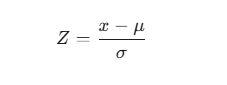
- Where $x$ is the current price, $\mu$ is the mean (SMA), and $\sigma$ is the standard deviation.
Traders typically look for entries when Z > 2.5 or 3. - Bollinger Bands: On low-liquidity pairs, a move beyond the 3rd standard deviation almost always signals a liquidity sweep, which is often followed by a reversion.
3. The Overlooked Detail: Sequencer Latency and MEV
Few traders take into account that L2 networks rely on a sequencer. It determines the order of transactions.
- Hidden risk: During extreme volatility, the sequencer can become overloaded. Your “mean reversion” order may execute at a time when the mean itself has already shifted along with the price.
- Alpha tip: Monitor pending transactions in the L2 mempool (if it is publicly accessible, as on some subnets) or track the activity of large arbitrage bots. If you notice a sizable swap that is not yet confirmed but is already moving the pool price, you can place a limit buy or sell order in the opposite direction.
4. Practical Implementation (Python Example)
To automate deviation detection on DEXs (Uniswap V3 / Maverick), you can apply a simple logic.
import pandas as pd
import numpy as np
def calculate_z_score(data, window=20):
    # Calculate the rolling mean and standard deviation
    data['sma'] = data['price'].rolling(window=window).mean()
    data['std'] = data['price'].rolling(window=window).std()

    # Compute the Z-Score
    data['z_score'] = (data['price'] - data['sma']) / data['std']
    return data
# Example logic:
# If z_score > 3 — open a Short (sell the asset expecting a move back down)
# If z_score < -3 — open a Long (buy the asset expecting a move back up)
5. The “Wick Hunting” Strategy
On low-liquidity pairs (TVL < $500k), price often makes sharp spikes.
Your action plan:
- Pair selection: Look for tokens with an active community but fragmented liquidity.
- Order placement: Instead of entering at market, place a “grid” of limit orders 5–10% away from the current price.
- Protocol usage: On L2, use Limit Orders on Uniswap V3 or specialized aggregators like 1inch/KyberSwap that are capable of capturing such moves.
Important: Low-liquidity pairs always carry the risk of a “death spiral.” If the price moves and does not return, it is not market noise but a fundamental unwind (a rug pull or negative news).
6. Mechanics of Working with Uniswap V3: Concentrated Liquidity as a Trap
On L2 networks (Arbitrum, Base), most DEXs use the Concentrated Liquidity (CL) model. This is critical for Mean Reversion:
- Essence: Liquidity is concentrated within a narrow price range. When a large seller "breaks through" this range, the price jumps into a "vacuum" (an area with zero liquidity), creating an abnormal spike.
- Your strategy: Place limit orders (Range Orders) just outside the main liquidity zones. On L2, fees are low enough to do this dynamically.
7. The "L2 Batching" Factor and Slippage
Lesser-known detail: L2s send data to Ethereum in "batches".
- If the network is congested, a transaction may show as confirmed in the explorer in 1-2 seconds, but finality on L1 takes much longer.
- Practical risk: When doing mean reversion on low-liquidity pairs, you may face Inventory Risk. While waiting for the price to revert, arbitrage bots can drain liquidity from other bridges, and the "average" price across DEXs may not move in your favor.
8. Advanced Code: Automated Monitoring (Python + Web3.py)
To avoid staring at charts all day, you can use a script that monitors the deviation of the pool price from an oracle price (e.g., Pyth or Chainlink).
from web3 import Web3
# Connect to Arbitrum/Base RPC
w3 = Web3(Web3.HTTPProvider('https://arbitrum-mainnet.infura.io/v3/YOUR_KEY'))

def check_deviation(pool_address, oracle_price):
    # Simplified pool price retrieval (slot0 for Uniswap V3)
    pool_contract = w3.eth.contract(address=pool_address, abi=POOL_ABI)
    slot0 = pool_contract.functions.slot0().call()

    # Convert sqrtPriceX96 to human-readable price
    pool_price = (slot0[0] ** 2) / (2 ** 192)

    deviation = abs(pool_price - oracle_price) / oracle_price

    if deviation > 0.05:  # If deviation > 5%
        print(f"⚠️ Anomaly! Deviation {deviation*100:.2f}%. Time to catch the reversion!")
        # Here you would call the order execution function
9. Risk Management: The "Three Candles" Rule
On low-liquidity pairs, Mean Reversion can turn into "catching falling knives".
- Rule: If the price deviates by 3 standard deviations and holds for more than 3 five-minute candles, do not enter. This usually indicates the market has overreacted (e.g., a project hack or a major investor fully exited).
- Stop-Loss: In L2 trading, stop-loss should be short in time, not just price. If reversion doesn’t happen within 15-30 minutes, it's better to close the position.
10. Little-Known Hack: Monitoring "Gas Spikes" on L2
On networks like Optimism or Base, a sudden gas surge often correlates with mass liquidations or manipulations in low-liquidity pools.
If you see L2 gas spike 5-10x, it signals that bots have started a battle over inefficiency. For a Mean Reversion trader, this is prime time: liquidity is extremely "thin," and random price spikes are most likely.
Starter Checklist:
- Choose a network with cheap gas (Base or Arbitrum).
- Look for tokens with $1M-$10M market cap and pools with up to $200k TVL.
- Set alerts for Z-Score > 2.5 on 5m/15m timeframes.
- Use limit orders instead of market orders to avoid slippage at entry.