
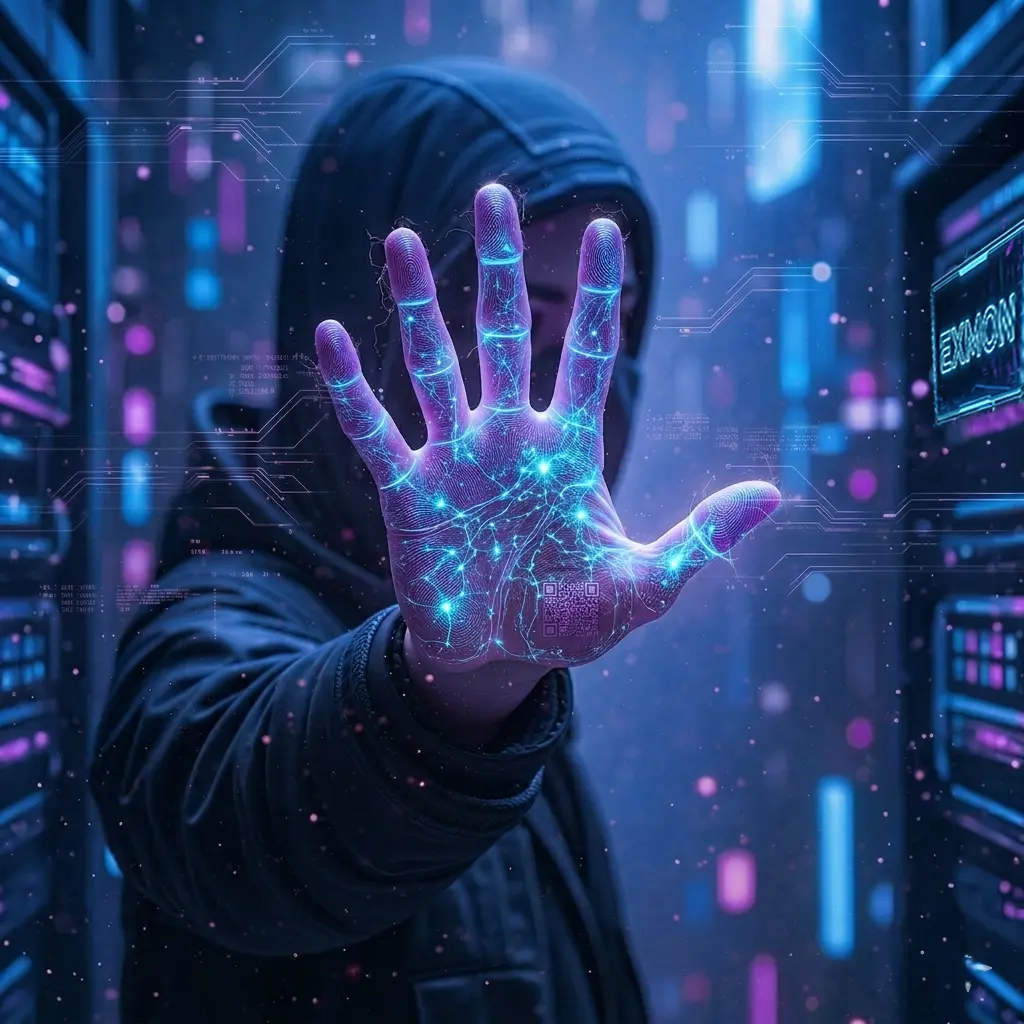
Welcome to 2026. The era of the “Turing Apocalypse” has already arrived: generative AI produces live video streams indistinguishable from reality, while LLM agents argue on social media more convincingly than most humans. In this digital noise, the old familiar question “Who’s on the other end of the line?” has become a matter of survival for democracy, the economy, and security.
Proof of Personhood (PoP) is not just a “passport on the blockchain.” It’s a cryptographic primitive that verifies two facts:
- You are a real human (not a bot).
- You are a unique human (you didn’t create 1,000 accounts for a Sybil attack).
In this article, we’ll break down how PoP technologies work today — from iris scanning to zero-knowledge proofs over social graphs.
1. The Anatomy of PoP: Three Pillars of Verification
By 2026, the industry has moved beyond simple CAPTCHAs (which AI now solves in fractions of a second). Three approaches dominate today:
A. Hardware-Based Biometrics
The best-known example is World (formerly Worldcoin), which uses specialized hardware (the Orb) to scan the iris.
- How it works: The retina is converted into a unique hash (IrisCode). The original image is deleted, and the hash is checked against a database for duplicates.
- What’s new in 2026: The rollout of AMPC (Advanced Multi-Party Computation). Your biometric code is no longer stored in full on a single server — it’s distributed in encrypted form across independent nodes.
B. Social Graph Verification
Projects like Human Passport (formerly Gitcoin Passport) or Proof of Humanity.
- Mechanism: Your “humanness” is verified through your connections. If 10 trusted people confirm that you are who you say you are, your trust score increases.
- Practical example: Accumulating “stamps” — attestations from GitHub, LinkedIn, banking services, and government IDs.
C. Device-Level Cryptographic Attestation
Using Secure Enclave chips in modern smartphones.
- Technology: The smartphone generates a key inside a secure processor that cannot be extracted. The application verifies that the request came from a physical device with active biometrics (Face ID / Touch ID).
2. Zero-Knowledge Proofs: Proving You’re Human Without Showing Your Face
The biggest fear of 2026 is the “digital gulag.” No one wants to hand over their biometric data to corporations. That’s where Zero-Knowledge Proofs (ZKPs) come in.
With ZK-SNARKs, you can generate a mathematical proof that:
“I own a unique IrisCode that exists in the registry of verified humans — but I won’t tell you which one it is.”
Example Implementation (Conceptual Code in Circom)
For developers, this looks like writing a “circuit” that verifies hash membership in a Merkle tree without revealing the hash itself.
JavaScript
// Simplified circuit example for verifying user uniqueness
template IdentityCheck(n) {
    signal input irisHash; // Private input (your hash)
    signal input merkleRoot; // Public input (root of the full human registry)
    signal input merklePath[n]; // Proof path in the tree
    signal output isVerified;
    // 1. Verify that the hash is indeed part of the Merkle Root
    component verifier = MerkleTreeVerifier(n);
    verifier.leaf <== irisHash;
    verifier.root <== merkleRoot;
    for (var i = 0; i < n; i++) {
        verifier.path[i] <== merklePath[i];
    }
    isVerified <== 1; // If verification passes, return true
}
3. Emerging and Lesser-Known Technologies in 2026
Liveness Detection Against Deepfakes
A simple photo is no longer enough. In 2026, services use random challenge-response verification:
- You may be asked to say a random phrase while the camera analyzes micro facial muscle movements and light reflections from the cornea.
- Cryptographic twist: The video stream is signed with your device’s private key at the moment of recording, preventing frame substitution (man-in-the-middle attacks).
C2PA and Provenance Metadata
The C2PA (Coalition for Content Provenance and Authenticity) standard has become mandatory for professional cameras. Now a video call can carry a cryptographic label: “This footage was captured on a Sony sensor and has not been processed by neural networks.”
4. Practical Tips for Users
- Build your own “Identity Stack”: Don’t rely on a single service. Link World ID (biometrics) with Human Passport (social connections) and ENS (profile name). This creates a layered defense for your identity.
- Use hardware wallets with Passkey support: In 2026, pairing a hardware wallet with smartphone biometrics is the gold standard.
- Beware of “Deepfake-as-a-Service”: If a service only asks for a simple video selfie with a passport (like back in 2021), assume it’s vulnerable. Professional protocols today always require ZK verification or dynamic liveness checks.
5. The “Humanity” Economy: Universal Basic Income (UBI) and Combating Farms
By 2026, identity verification has become more than a security measure—it’s a source of income. With AI replacing millions of jobs in copywriting, design, and basic coding, the concept of Universal Basic Income (UBI) has moved from theory into smart contracts.
Birthright Airdrops
Projects like World and Proof of Humanity now distribute tokens not for investment, but for the simple “fact of existence.”
- How it works: Once a month, a smart contract checks your active ZK-proof in the registry and sends a fixed amount directly to your wallet.
- The “Retina Farm” Problem: In low-income countries, organizations rent out locals’ eyes. A person gets scanned, receives a one-time payout, and the intermediary takes control of their digital identity (and future UBI).
- Technical fix in 2026: Proof of Liveness Re-verification. Protocols now require random checks throughout the year. Fail to confirm access to your biometric key within 24 hours? Your account gets frozen.
6. PoP in Governance: From “One Token, One Vote” to “One Person, One Vote”
Early Web3’s main headache was whale power—wealthy token holders calling all the shots. By 2026, decentralized organizations (DAOs) are moving en masse to Quadratic Voting, powered by Proof of Personhood.
The Math of Fairness
With quadratic voting, the cost of each additional vote from the same person grows exponentially:
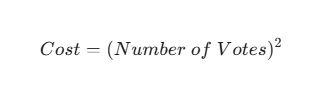
- 1 vote costs 1 token.
- 10 votes cost 100 tokens.
Why PoP matters: Without reliable proof of uniqueness, a rich user could create 100 wallets (a Sybil attack) and each vote would cost only 1 token. PoP protocols make that economically impossible.
7. Next-Gen Attacks: How AI Tries to Be Human
By 2026, hackers aren’t just stealing passwords—they’re “hacking” biology.
- Virtual Camera Injection: Advanced AI models intercept webcam signals at the system level and inject a deepfake that reacts to verification requests in real time.
- Defense: Attested Video. Modern laptop cameras sign every frame at the hardware level. No signature—or a tampered one—and verification fails.
- Social engineering via AI avatars: Bots build trust with real users on Discord or Telegram, convincing them to vouch in the social graph (Web of Trust).
- Defense: Slash Mechanism. If you vouch for a bot, your own trust score is wiped and any staked assets are burned.
8. Practical Example: Creating Private Attestations via EAS (Ethereum Attestation Service)
These days, just having data isn’t enough—you need to “attest” it. Here’s how a developer can integrate human verification into an app.
TypeScript
import { EAS, SchemaEncoder } from "@ethereum-attestation-service/eas-sdk";
// 1. Initialize EAS
const eas = new EAS("0xC26..."); // Contract address on Mainnet/L2
// 2. Encode verification data
const schemaEncoder = new SchemaEncoder("bool isHuman, string provider");
const encodedData = schemaEncoder.encodeData([
  { name: "isHuman", value: true, type: "bool" },
  { name: "provider", value: "WorldID-Orb-V3", type: "string" },
]);
// 3. Create attestation (authorized provider only)
const tx = await eas.attest({
  schema: "0x345...", // "Proof of Personhood" schema ID
  data: {
    recipient: "0xUserAddress...",
    expirationTime: 0, // Never expires
    revocable: true,
    data: encodedData,
  },
});
const newAttestationUID = await tx.wait();
console.log("User officially recognized as human:", newAttestationUID);
9. Takeaways: The Future is “Hybrid Identity”
By 2026, it’s clear: no single technology gives 100% certainty. The future of Proof of Personhood is multi-factor humanity:
- Who you are: Your biometrics (ZK-Iris).
- What you do: Your blockchain transaction history (On-chain reputation).
- Who you know: Your verified social connections.
10. The Right to Anonymity vs. the Right to "Humanity"
By 2026, the legal landscape has split into two camps. On one side, governments are pushing for de-anonymization via Soulbound Tokens (SBTs) linked to official IDs. On the other, crypto-anarchists and privacy advocates are championing the concept of Pseudonymous Personhood.
A Philosophical Shift: EU AI Act 2.0
Recent amendments to European law introduced the idea of the "Right to Know Your Conversational Partner." Now, every AI agent must carry a digital watermark, and any human can demand cryptographic proof that they are interacting with a person, not an algorithm.
This has created a paradox:
- Prove you’re human, and you might reveal your identity.
- Stay fully anonymous, and services treat you like a bot (limited reach, message caps, monetization restrictions).
2026 Solution: ZK-Selective Disclosure. You can prove that you are:
- Human.
- Over 18.
- An EU resident.
…without ever revealing your name or exact birthdate.
11. AI Agents: Do They Deserve "Identity"?
The hottest trend this year is Proof of Model (PoM).
While humans struggle to prove they’re human, advanced AI agents (Autonomous Agents) are working to prove their "authenticity."
- Why does it matter? Investors want to be sure that the trading algorithm they’re trusting with funds is the real Llama 4 or GPT-6 model that passed audits—not a cheap knockoff with a backdoor.
- How does it work? Models run inside Trusted Execution Environments (TEEs), like Intel TDX or ARM TrustZone. The processor issues an attestation: "This output was generated by these exact model weights in a secure environment."
12. Final Checklist: Surviving the Deepfake Era
If you’re a developer or power user, your 2026 security stack should look like this:
| Layer | Tool / Protocol | Why it matters |
|---|---|---|
| Biometric | World ID / Privado ID | Global uniqueness without handing over your passport. |
| Reputation | Gitcoin Passport / EAS | Build "weight" from your history (deposits, DAO participation). |
| Communication | C2PA / XMTP | Message encryption and media authenticity verification. |
| Hardware | Passkeys (WebAuthn) | Replace passwords with cryptographic keys tied to biometrics. |
Conclusion: The Battle for Reality
Proof of Personhood in 2026 isn’t just a spam-fighting tool. It’s the foundation of a new social contract. We’re moving from an internet where "no one knows you’re a dog" to one where "anyone can prove they’re human," while still keeping the right to privacy.
ZK-SNARKs, biometrics, and hardware attestations are our digital walls. But remember: in a world where AI learns to mimic humanity, the most valuable currency isn’t code—it’s trust, built on transparent mathematical proof.
Summarize this blog post with: