
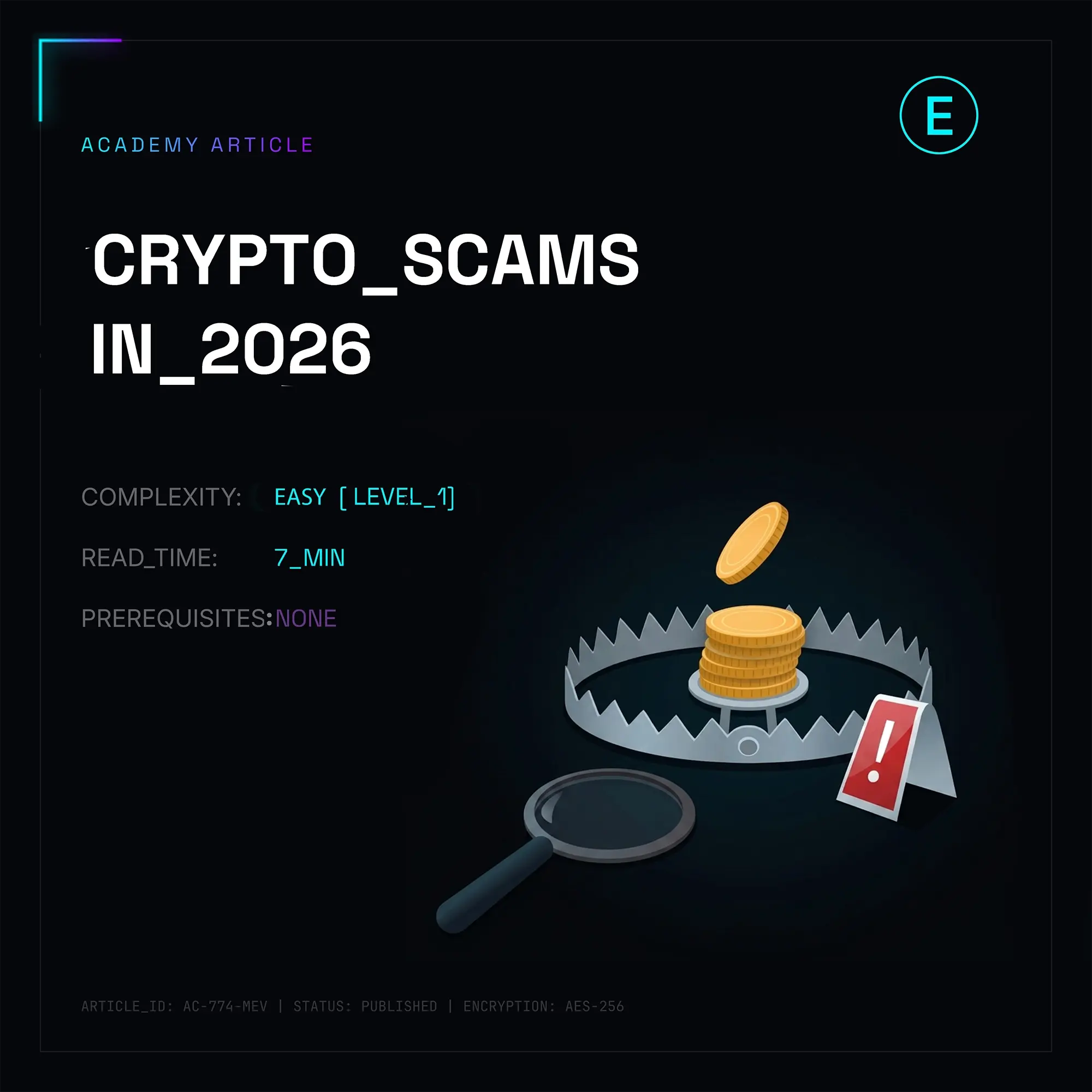
The crypto landscape in 2026 isn't just about tech evolution; it's a hotbed for some next-level ingenuity from bad actors looking to drain your bags. The days of basic "Nigerian Prince" scams are long gone. Now, it's all about AI-powered social engineering, deepfake trickery, and sophisticated UI manipulation within blockchain protocols.
Here’s a breakdown of the 10 most lethal crypto scams you need to be aware of right now.
10 Most Lethal Crypto Scams
- 1. Address Poisoning
Scammers spin up vanity addresses that match the first and last 5-6 characters of your frequent contacts. They’ll hit your wallet with "dust" (tiny transactions) from that fake address. If you're lazy and just copy-paste from your transaction history later, you’re almost certainly going to blast your funds straight into the scammer’s wallet. - 2. Real-Time Deepfake Attacks
With AI tools getting cracked, hackers are using "Live Injection" to swap faces and voices during Telegram or Zoom calls. They impersonate project leads or exchange support staff to panic you into sending a "security-mandated" transfer. - 3. Malicious Approvals (Phishing)
You get hit with a "free" NFT or a juicy airdrop link. You connect your wallet and sign a transaction. But instead of getting a reward, you’re hitting 'SetApprovalForAll'. You just gave their smart contract permission to drain your tokens at will. They can wipe your wallet clean whenever they feel like it. - 4. P2P "Triangle" Scams
This is classic criminal arbitrage. You sell USDT on P2P, and a "buyer" sends you fiat. But the money actually comes from a third party—some other victim being scammed elsewhere. When the dust settles, your bank account gets flagged for money laundering, and you're caught in a massive legal headache. - 5. Search Ad Spoofing & Mirror Sites
Scammers bid on Google/Bing keywords for "MetaMask," "Coinbase," or "Ledger Live." You click the top ad, land on a pixel-perfect clone of the real site, enter your seed phrase, and boom—your wallet is emptied in seconds. - 6. Bridge & Smart Contract Exploits
In 2026, the real heat is on bridges and DeFi protocols. If you're farming in some obscure protocol, there’s a genuine risk that a bug in the code lets hackers drain the entire liquidity pool in one go. - 7. VibeScams
They build a whole ecosystem around a fake project: slick socials, paid shills, and a rigged price chart to start. Once the liquidity hits a peak, the team pulls the rug, leaving you holding a bag that’s worth exactly zero. - 8. Clipboard Hijackers
Malware (usually a shady browser extension or PC app) is silently watching your clipboard. As soon as you copy a crypto address, the software swaps it for the scammer’s address in milliseconds. - 9. Fake Support Impersonation
You’ll get a random DM from a "support admin" or "dev" asking you to "verify" or "upgrade your smart contract." The links go to a fake UI designed to phish your seed phrase or private key. Never trust a DM. - 10. Cold Storage Attacks
Scammers target the devices *managing* your cold wallet. If you’re storing your seed phrase as a photo in iCloud, Google Photos, or Notes, they’ll hack the account and drain your funds even if your Ledger/Trezor is sitting safe in your drawer.
Table: Notable Incidents
| Project/Incident | Year | Method | Est. Loss |
|---|---|---|---|
| KelpDAO | 2026 | Bridge/Contract Exploit | ~$293M |
| Drift Protocol | 2026 | Smart Contract Exploit | ~$285M |
| Bybit | 2025 | Leaked Credentials/Malicious Approval | ~$1.5B |
| WazirX | 2024 | Malicious Approval (UI) | >$230M |
| DMM Bitcoin | 2024 | Social Engineering | ~$305M |
Staying Safe: The 2026 Gold Rules
- Zero Trust Policy: Never, ever click ads in search results. Save the official URLs of every exchange and bridge to your bookmarks.
- Hardware Only: If you can't afford to lose it, it stays on a Ledger, Trezor, or Keystone. Never, ever type your seed into a PC or phone.
- Use a Burner Wallet: Keep a disposable wallet for dApp interaction with only the small amounts you’re okay with losing. Never touch your main stack with a random site.
- Revoke.cash is your best friend: Frequently scrub your permissions. Use services like Revoke.cash to kill old approvals on your tokens.
- Check the Address: Verify the whole address, not just the first few characters. If it’s a whale move, send a $5 test transaction first. Period.
- P2P Hygiene: Stick to major exchanges and vet your counterparties. Never take funds from a third party—if the name on the wire doesn't match the name on the exchange, walk away.
Social Engineering 2.0
Beyond the bugs, 2026 is the year of hyper-personalized, AI-driven manipulation.
- The "Authority" Effect: Scammers track your activity on X and LinkedIn. They’ll impersonate a lead dev or founder of a protocol you hold, using AI to perfectly mimic their tone and speech patterns.
- Fabricated Urgency: The oldest trick, but still the most effective. "Your account will be nuked in 2 hours," "Migrate tokens via this link ASAP." Always freeze. Urgency is designed to kill your critical thinking.
- The "Recovery" Scam: If you’ve been rekt, you’ll get DMs from "white hat hackers" or "legal firms" claiming they found your funds. They’ll ask for a retainer or "gas fees" to release them. It’s a classic refund scam—they're just taking a second bite of the apple.
Technical Check: How to DIY Audit a Contract
Before you approve anything, do a quick DIY audit. You don't need to be a coder:
- Check the Explorer: Pull the contract address on Etherscan or the relevant chain explorer.
- 'Contract' Tab: Check if the source code is verified. No green check? Massive red flag.
- Comments/Reports: Check the contract comments. If the community is calling it a phishing or honeypot address, don't touch it.
- Scan it: Use tools like Token Sniffer or GoPlus Security. They automatically flag nasty stuff like
blacklistfunctions orhoneypotsthat prevent you from ever selling.
Wallet Defense Layers (Checklist)
For serious security in 2026, implement "defense in depth":
- Level 1 (Hot Wallet): Bare minimum funds, strictly for interacting with reputable CEXs and tiny swaps.
- Level 2 (Multi-sig Smart Wallet): Use something like Safe. Configure it so transactions over $1,000 require two separate devices to sign. Compromising one key means nothing.
- Level 3 (Cold Storage): A hardware wallet that never sees the internet. Seed phrase is etched in metal and stored in a secure location off-site.
The Details That Get You
- DNS Attacks: Hackers sometimes hijack the DNS of legit projects to route you to a fake site. Always verify the Contract Address (CA) via CoinGecko or CoinMarketCap directly, not from the site itself.
- Transaction Tainting: Don't use shady mixers. Exchanges have robust AML/KYC filters; if they flag your coins as "dirty," they’ll freeze your deposit faster than you can blink.
Security in crypto isn't a destination; it's a grind. Your ultimate defense is realizing that in a decentralized space, you are your own bank, your own CISO, and your own insurance provider. If an opportunity looks too good to be true, it’s not an opportunity—it's a trap.