
Imagine you walk into a casino. You exchange dollars for chips. You're promised that at any moment you can get your dollars back. But behind the scenes, the casino manager takes your money and... doesn't put it in the safe. Instead, he lends it to a local moneylender, buys promissory notes of dubious companies, and a few shares of the same casino.
This is Shadow Banking in the world of stablecoins. A system that performs banking functions but has no banking license, isn't insured by the state, and plays by its own rules.
Chapter 1: "Offshore Alliance" and the Magic of Liquidity
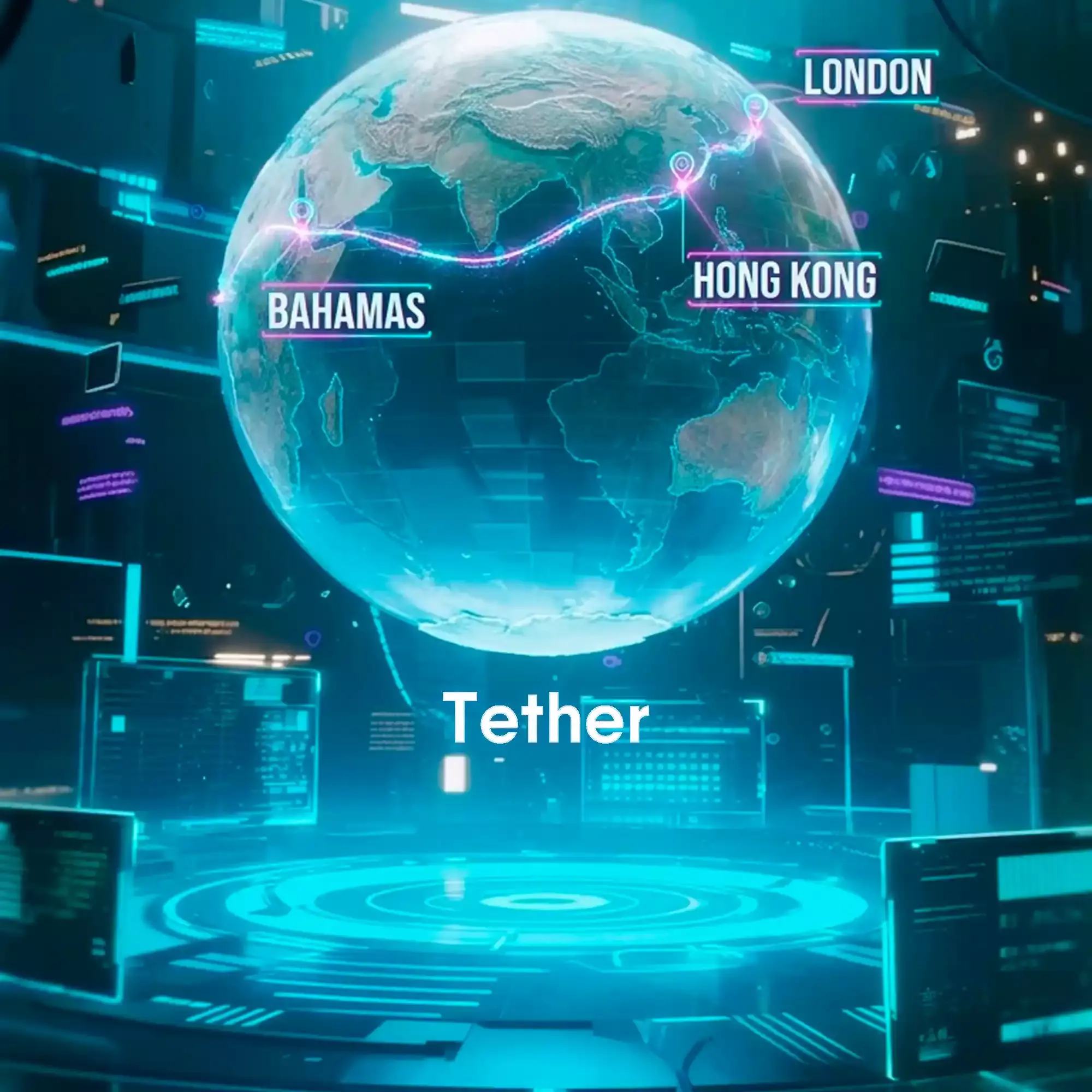
If you think USDT (Tether) liquidity comes from US Treasuries, you're only half right. The real magic happens in the Hong Kong — Bahamas — London triangle.
Puppeteers Behind the Curtain
By 2026, it became clear: the market relies on the "holy trinity" of market makers. These are Wintermute, Jump Crypto, and Cumberland.
- How it works: When the market starts "dumping" and retail traders panic-sell USDT for BTC, these guys buy up the excess. Where do they get the money? Often — from credit lines provided by Tether itself.
- The Grey Cardinal: Few know, but a significant portion of USDT liquidity in Asian markets flows through a chain of small banks like Capital Union or Ansbacher. These "pass-through banks" allow Tether to bypass strict US compliance.
Unverified Version: "Circular Collusion"
There is a persistent rumor (supported by on-chain analysis of large wallets) that Tether and the largest crypto exchanges (including Binance and OKX) created a unified reserve pool. During sharp sell-offs, they don't sell assets on the open market but "manufacture" liquidity via internal clearing accounts. This keeps the $1.00 peg, even if there aren't enough real dollars for everyone.
Chapter 2: Anatomy of a Bank Run: When Math Becomes the Enemy
A Bank Run in crypto is not a line at the ATM. It's a cascade of smart contracts.
Point of No Return: Algorithmic Break
Mass exit doesn't start when "regular people" sell stablecoins. It begins when arbitrageurs stop believing in the redemption.
- Trigger: A regulator (SEC or OFAC) blocks one of the issuer's major addresses or its bank account at Cantor Fitzgerald.
- Panic in Curve 3Pool: This is the "holy of holies" in DeFi. Once the USDT share in the pool exceeds 80-90%, it means everyone wants to get rid of it.
- Death Spiral: If the price drops to $0.98, lending protocols (like Aave) start liquidating positions of those who used USDT as collateral. This floods the market with even more USDT. The price drops toward $0.90.
Practical Example: "Ghost Liquidity" Case
In 2024-2025, there were strange spikes where a 2% drop in a stablecoin triggered sudden $500 million buy orders. This is "Ghost Liquidity" — funds from the reserve technically locked in bonds but instantly converted to cash through a chain of REPO transactions.
Chapter 3: Lesser-Known Mechanism: Shadow REPO Deals
Few regular users understand that Tether is a major player in the REPO market. The essence: They lend their US government bonds to large hedge funds on Wall Street in exchange for short-term cash.
- Risk: If the US bond market starts to storm (as in March 2023), hedge funds demand more collateral (Margin Call).
- Result: To cover the margin, Tether has to sell bonds at a loss. Then "100% collateral" turns into 90%, 80%... creating a hole in the balance sheet.
Chapter 4: Survival Code: How to Spot a Bank Run First
Professionals don’t watch the news. They watch Skew and Discount. To monitor the situation like a pro, track price differences between the stablecoin on decentralized exchanges (DEX) and centralized exchanges (CEX).
Python
# Pseudocode for monitoring "Depeg Risk"
def monitor_depeg(dex_price, cex_price):
    threshold = 0.005 # 0.5% difference
    spread = abs(dex_price - cex_price)

    if spread > threshold:
        print("ALARM: Arbitrageurs are overwhelmed. Liquidity is leaving!")
        trigger_exit_strategy()
Insider tip: The fastest money flows out through Curve Finance. If you see the USDT/USDC pool deviate from 50/50 by more than 15% — you have about 10-20 minutes to exit without massive losses.
Now let's move on to the most interesting part — where the real players sit and the mechanisms work that Bloomberg never writes about.
Chapter 5. Protocol "X": Dark Pools and the Elite's Black Exit
When panic hits the market, the average trader rushes to Binance or Uniswap and tries to hit "Sell." But the pros know: at this point, liquidity on exchanges is gone, and slippage will eat 10–20% of your deposit.
How does the elite exit?
There’s a system of Dark Pools (hidden liquidity pools) and OTC desks (over-the-counter trading). Big market makers like FalconX or Genesis (and their successors in 2026) provide a “guaranteed exit” service for institutions.
- Scheme: While you see USDT at $0.99 on the chart, large funds exchange hundreds of millions of USDT for “clean” fiat or BTC via OTC deals at $0.995.
- Secret: These trades don’t hit the blockchain instantly or are masked through mixers and aggregators. By the time the regular crowd notices a crash to $0.95, the smart money has already exited.
Little-known fact: Some stablecoin issuers have private agreements with select hedge funds. In a crisis, these funds get priority redemption, bypassing the general queue. This is the highest form of Shadow Banking — priority exit for insiders.
Chapter 6. Geopolitical Shield: Stablecoins as the "SWIFT for the Untouchables"
Why is Tether (USDT) still alive despite all US regulatory attacks? The answer lies in its new role: a tool for sanctions evasion and cross-border payments.
- Chinese transit: A huge chunk of USDT liquidity is tied up with Chinese importers working with Russia, Iran, and Africa. For them, the stablecoin is not an investment — it’s transportation.
- "Unsinkable" theory: There’s a hypothesis that intelligence agencies of several countries (including the US) deliberately don’t “shut down” Tether. Why? Blockchain transparency allows them to monitor shadow economy flows better than through closed banking systems.
Risk: This makes stablecoins hostages of geopolitics. If tomorrow the geopolitical benefit of monitoring drops below the risk of financial destabilization, Tether can be “switched off” with a snap — via Cantor Fitzgerald account freezes.
Chapter 7. Practice: Your Personal Emergency Exit Plan
If you sense trouble brewing, don’t wait for official news. In 2026, news is noise; data is the signal.
1. Monitor the "Whales’ Breathing"
Watch wallets of major market makers. If Jump Crypto or Wintermute start moving stables en masse from cold wallets to exchanges — they’re preparing to unload.
2. Technical Indicator: Deviation from T-bill Yields
If the yield offered by an issuer through staking programs falls below the risk-free US bond yield (3-month T-bills), the system is effectively operating “on borrowed liquidity.” Funds are being drained.
3. Where to run?
If a USDT bank run starts:
- Option A (Safe): Move into USDC (if only Tether is affected). But remember: USDC also dropped in 2023.
- Option B (Hardcore): Move into Bitcoin. Yes, volatile, but it can’t be frozen on the issuer’s account. During a stablecoin crash, BTC often dips first, then spikes as people swap “tokens” for “digital gold.”
- Option C (Professional): Buy put options on crypto-linked stocks (e.g., Coinbase or MicroStrategy). This hedges your risk against a full market collapse.
Chapter 8. Technical Section: Panic Detection Script (Shadow Liquidity Tracker)
Professionals use scripts to monitor pool imbalances. Here’s a logic you can implement:
Python
# Liquidity monitoring logic for Curve 3Pool (DAI/USDC/USDT)
def check_curve_emergency(pool_contract):
    # Get asset balances in the pool
    balances = pool_contract.get_balances()
    usdt_share = balances[2] / sum(balances)

    # Critical threshold: if one asset is over 70% of the pool
    if usdt_share > 0.70:
        return "WARNING: Heavy imbalance. USDT liquidity at risk!"
    elif usdt_share > 0.85:
        return "CRITICAL: Bank Run in progress. EXIT NOW!"
    return "Status: Stable"
Conclusion: Who wins this game?
Shadow Banking in crypto is a house of cards built on a titanium foundation. It’s incredibly efficient while trust exists. But the moment the biggest market maker decides the risk outweighs the profit, they pull the plug.
Main advice: Never hold more than 30% of your capital in a single stablecoin. Spread risk across USDT, USDC, and decentralized options like LUSD (fully backed by ETH).
Frequently Asked Questions (FAQ)
1. If stablecoin reserves are attested, why do risks still exist?
Attestation is not an audit. It’s just a snapshot of balances at a specific time, often done in offshore jurisdictions. The main risk of shadow banking isn’t lack of assets but their liquidity. In a panic, the issuer could hold billions in bonds but be unable to instantly convert them to cash through small partner banks (like Capital Union) to meet mass redemption demand.
2. Could the US government intentionally trigger a Tether bank run?
Theoretically — yes, by freezing correspondent accounts or sanctioning key custodians (e.g., Cantor Fitzgerald). But this is a double-edged sword. Since stablecoin issuers are major holders of US government bonds (T-bills), forced mass selling could cause chaos in the traditional debt market. Regulators are more likely to act via slow compliance pressure than by abruptly cutting liquidity.
3. What’s the main difference between a "shadow exit" via Dark Pools and a regular exchange sale?
Regular exchange sales (Binance, Uniswap) directly impact market price: the more you sell, the lower it goes. Dark pools and OTC desks allow institutional players to transact “off-book.” This lets the elite exit at close to $1.00, while retail traders are last to notice problems, after public pool liquidity is exhausted and prices cascade down.