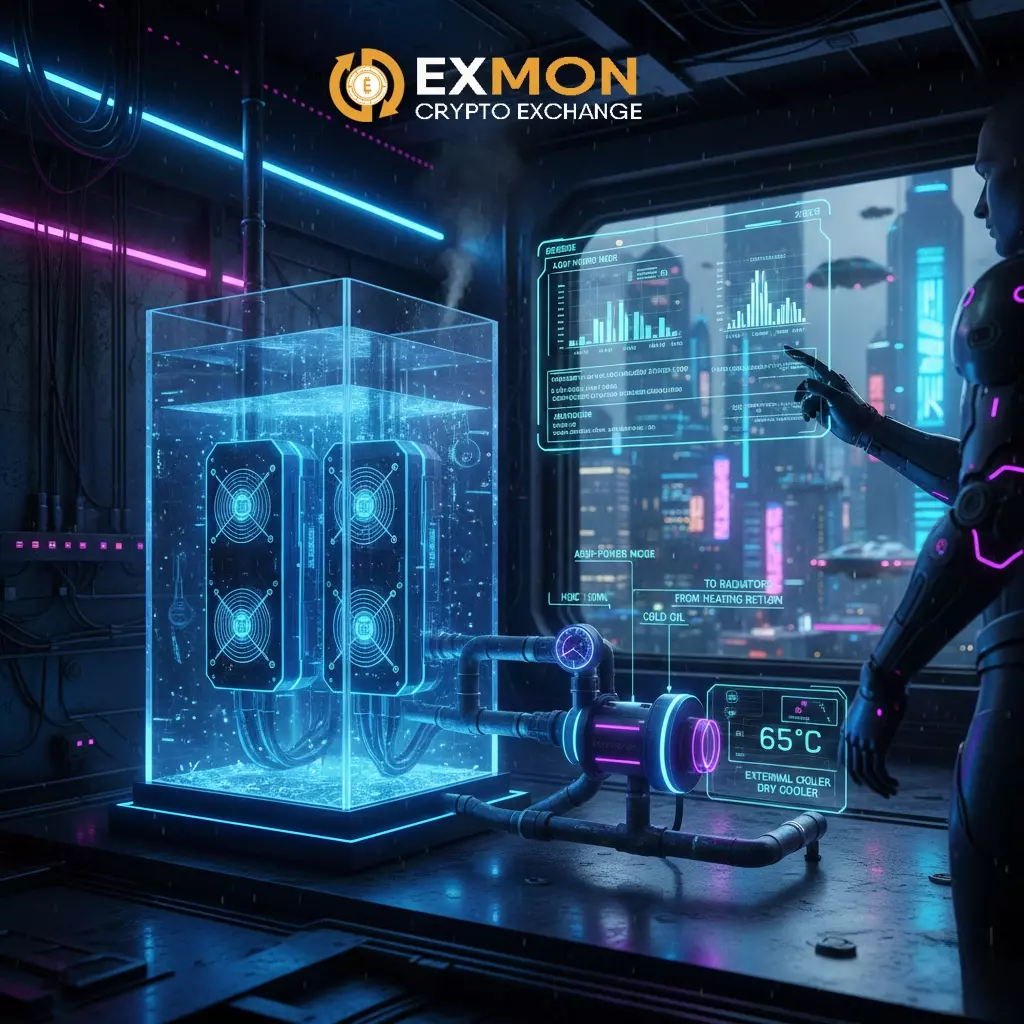
If a noise box is a compromise, then immersion cooling is the ultimate solution for 2026. We are completely removing the fans, submerging the ASIC in liquid, and creating a perfectly silent heater with heat transfer efficiency that is near-perfect.
1. How does it work in a home ecosystem?
Instead of heating the air, the ASIC heats a specialized dielectric fluid. This fluid circulates through a heat exchanger, where it transfers heat to the water flowing into your radiators or underfloor heating system.
Key advantages:
- 0 dB noise from the miner (only a quiet pump can be heard).
- 20-40% Overclocking: Liquid dissipates heat much better than air, allowing you to "push" the chips without the risk of overheating.
- Longevity: No dust, no fan vibrations, and no oxidation of contacts.
2. Choosing the "Oil" (Dielectric)
In 2026, the market moved away from standard transformer oil due to its odor and flammability. We use specialized single-phase immersion fluids (PAO or silicone-based).
Selection criteria:
- Viscosity: The lower it is, the easier it is for the pump to circulate the fluid.
- Flash Point: Must be above 200°C.
- Dielectric Strength: To ensure no short circuits occur.
- Eco-friendliness: Crucial for residential areas (no fumes or evaporation).
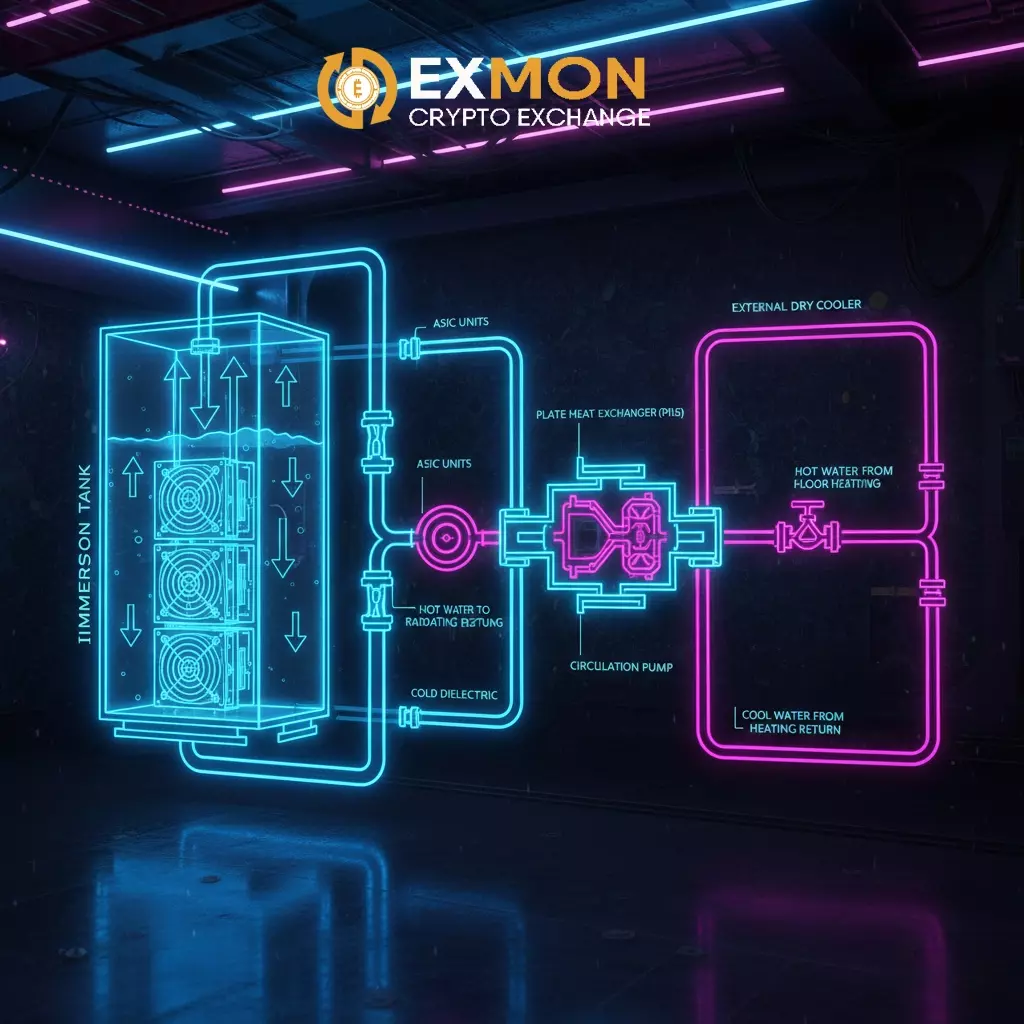
3. "Miner-Boiler" System Components
To build a setup for 1-2 miners, you will need:
- Tank (Enclosure): Made of stainless steel or polypropylene.
- Plate Heat Exchanger (PHE): The heart of the system. This is where the "oil" meets the water from your heating system.
- Circulation Pump: To move the dielectric (Note: pump seals must be oil-resistant, e.g., Viton).
- Filtration System: A mesh filter to catch small particles.
- Fan Simulators: Spoilers that plug into the fan headers on the ASIC control board so it "thinks" the fans are still spinning.
4. Heating Connection Diagram
 [ ASIC TANK ] <----(Hot Oil)---- [ PUMP ]
        ^                               |
        |                               v
 (Cold Oil) <---- [ HEAT EXCHANGER ] <---'
                             |     ^
                             |     |
            (To Radiators) <|     |> (From Heating Return)
A little-known 2026 detail: Using a three-way thermostatic valve. If the water in the heating system gets too hot (e.g., +65°C), the valve redirects the oil flow to an external radiator (dry cooler) outside to prevent the ASIC from overheating.
5. Practical Assembly Tips
- ASIC Preparation: Before submerging, you must remove the fans and thoroughly blow out any dust. If dust gets into the oil, it turns into an abrasive sludge that will clog the chip heatsinks.
- Vertical Submersion: Place the ASIC with the interfaces (power connectors) facing up. This makes maintenance easier and prevents air bubbles from trapping in the heatsinks.
- Sealing: Dielectric fluid has high fluidity. Use only high-quality threaded connections and anaerobic sealants.
High-End Solution Budget:
- Tank + Piping: ~$300 - $500
- Heat Exchanger: ~$150
- Fluid (40-60 liters): ~$200 - $300
- Pump and Fittings: ~$150
Total: Around $800 - $1100 on top of the miner's cost. However, this transforms your device into a permanent, silent boiler.
Immersion is an investment in comfort and maximum efficiency. You aren't just heating a house; you are creating a professional engineering system. However, for everything to run smoothly, you need to properly configure the hardware's "brains."
That’s not all. The most interesting part is next—software optimization—to ensure the system doesn't boil over and operates as economically as possible.
Next up: "Software for the Home Miner: Setting up Low-Power Mode and Auto-Tuning."
Crypto Heating Series 2026: Part 3 of 5
Summarize this blog post with: