
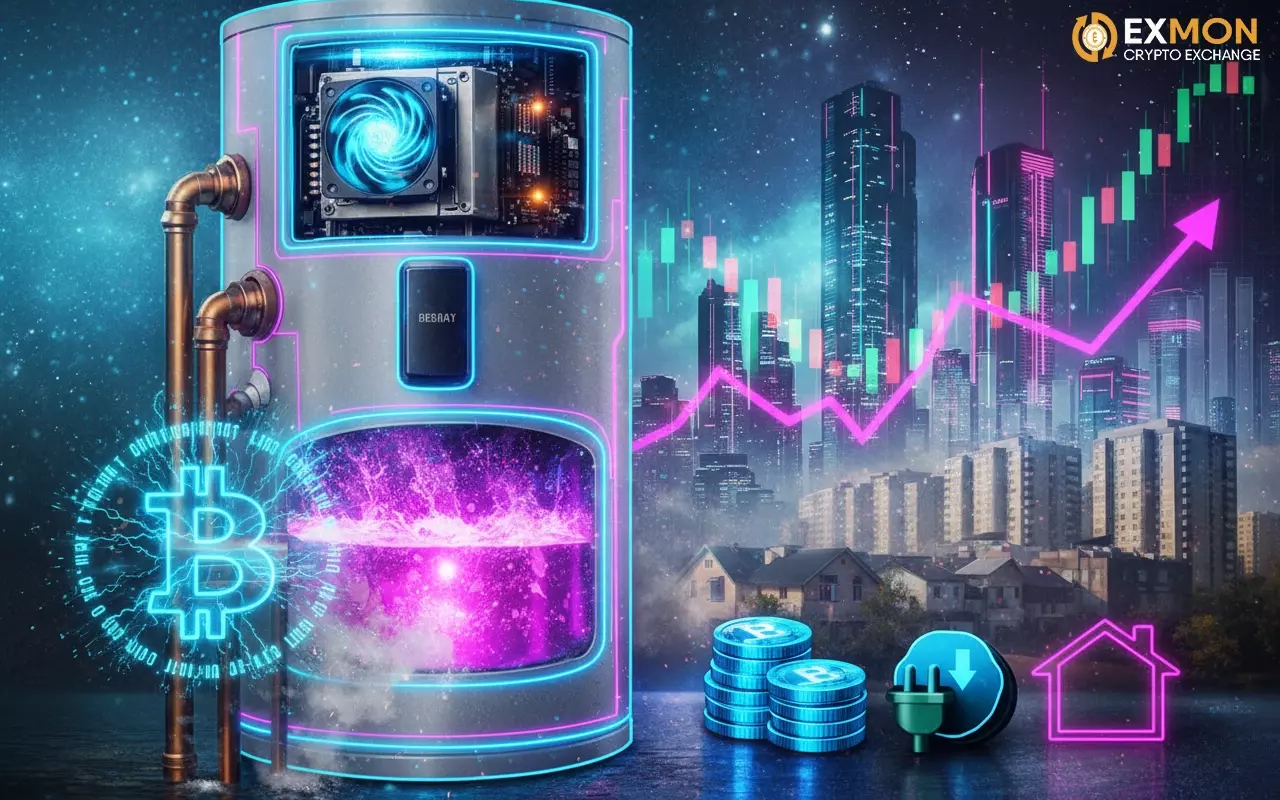
In 2026, mining is no longer an arms race confined to industrial warehouses in Iceland. It has officially moved into our living rooms, basements, and even bathrooms. Why? Because skyrocketing inflation and energy costs have turned traditional electric heating into a luxury—while an ASIC miner has become a device that literally pays you to keep your house warm.
The "Useful Heat" Philosophy
In the past, miners treated heat as a problematic byproduct to be exhausted. In 2026, we view the hashrate as a byproduct of thermal energy generation.
The concept is simple: any electric space heater is nearly 100% efficient (almost all energy is converted to heat). An ASIC does exactly the same thing, but before that electricity turns into warmth, it performs "useful work"—calculating hashes.
Economic Duel: Traditional vs. Crypto-Heating
Let’s compare the cost of heating a 1,000 sq. ft. (approx. 100 m²) home for one winter month, based on average 2026 utility rates.
| Parameter | Electric Boiler | Gas Furnace | ASIC System (S21/T21) |
|---|---|---|---|
| Consumption | ~5,000 kWh | ~550 m³ Gas | ~5,000 kWh |
| Utility Bill | $400 | $150 | $400 |
| Mining "Cashback" | $0 | $0 | $350 - $450 |
| Net Monthly Cost | -$400 | -$150 | +$50 to -$50 |
*Data reflects average network difficulty and BTC prices as of February 2026.
The Bottom Line: Mining-based heating in 2026 is the ultimate way to zero out your utility bills or even turn a small profit while keeping your home cozy.
The Psychology of "Silent Mining"
Why hasn't everyone put an ASIC in their bedroom yet? One reason: Acoustic Terror.
A stock industrial miner puts out about 80 dB. To put that in perspective:
- 30 dB: A soft whisper;
- 60 dB: Typical office noise;
- 80 dB: A shouting person or a running motorcycle;
- 100 dB: A jackhammer.
Living with a "motorcycle" in your hallway is impossible. This is where the line is drawn between a "hobbyist" and a "crypto-boiler" owner. In 2026, the home miner's philosophy rests on three pillars:
- Visual Stealth: The unit must blend into the interior or be hidden in a utility area.
- Acoustic Comfort: Noise levels must not exceed 35-40 dB.
- Set-and-Forget: The system must be autonomous, automatically adjusting based on the home's ambient temperature.
Tech Solutions: The Path to Silence
In this series, we will break down the three main ways to turn a loud monster into a cozy home appliance:
1. Low-Cost Air Cooling (Silence Boxes)
Using the "labyrinth" principle and sound-absorbing foam. This is the cheapest entry point for home heating. You build a "muffler" that kills the sound waves but allows airflow.
- Complexity: Low.
- Result: Reduces noise to the level of a kitchen range hood.
2. Software Tuning (Underclocking/Downvolting)
Why run an ASIC at 100% capacity? Modern custom firmware allows you to lower power consumption and fan speeds. You might lose 20% of your revenue, but you eliminate 80% of the noise.
- Complexity: Medium (requires basic knowledge of chip tuning).
3. High-End Immersion Cooling
Complete submersion in dielectric fluid. No fans. Heat is captured via a heat exchanger directly into your home’s radiators or hot water tank.
- Complexity: High.
- Result: Absolute silence and the highest thermal efficiency.
The 2026 Pro Hack: "Hydro-Heating"
Many aren't aware that the newer "Hydro" series (like the Whatsminer M63S) are natively designed for water cooling. You can hook them directly into your radiant floor heating loop without buying expensive immersion tanks. This is a total game-changer for homeowners.
What’s Next?
Mining is no longer just about "numbers in a wallet"—it’s about engineering ingenuity. In our next post, we’ll move from theory to reality and show you how to build your first silence box so you can finally sleep in the same room as your ASIC.
Up Next: "The DIY Silence Box: A Step-by-Step Guide with Blueprints and Budgets." we’ll calculate why your ducting needs to be exactly 8 inches (200mm) and how to avoid frying your chips in the pursuit of peace and quiet.
Crypto Heating Series 2026: Part 1 of 5
Summarize this blog post with: