
This is a deep dive into one of the most insidious techniques in cryptoanalysis. A dusting attack isn’t a hack in the usual sense—it’s blockchain-level social engineering, where microtransactions are used instead of phishing emails.
Dusting Attack: The Mechanics of a “Digital Mark”
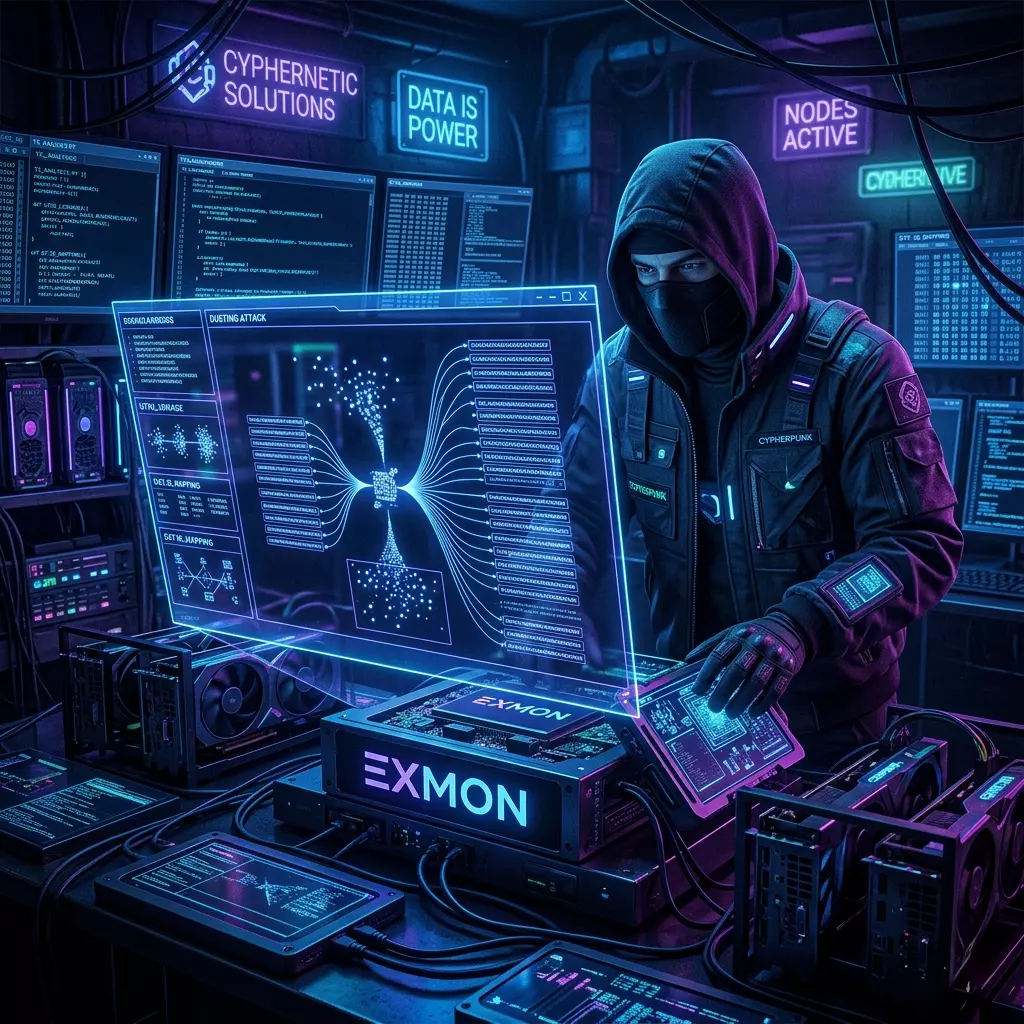
A dusting attack is the act of sending tiny amounts of cryptocurrency (so-called “dust”) to thousands of public addresses. “Dust” refers to an amount smaller than the transaction fee required to move it—for example, 1–500 satoshis.
Why do intelligence agencies and Chainalysis need this?
The main goal is de-anonymization. Blockchains like Bitcoin, Litecoin, and Dogecoin operate on the UTXO (Unspent Transaction Output) model. When you send a transaction, your wallet bundles together change and multiple small inputs into a single transaction.
If you accidentally include the received dust in your next payment, analytics software (such as Crystal or Elliptic) will instantly link all your addresses into a single cluster.
Attack Anatomy: From Transaction to Fiat Gateway
- Seeding: The attacker (a fund or a government entity) sends 100 satoshis to 10,000 addresses found on the blockchain.
- Waiting: The user sees a “gift” in their wallet. Most inexperienced users ignore a +$0.01 balance.
- Linking: You decide to withdraw 1 BTC to an exchange. Your wallet automatically combines your 0.99 BTC and those same 100 satoshis of “dust” to cover the amount or the fee.
- Doxxing: Once the dust is mixed with your main funds, the analyst sees: “Addresses A, B, and C belong to the same person.” If even one of these addresses has ever interacted with a KYC exchange, your anonymity is gone.
Practical Analysis: What This Looks Like in Code
If you’re a developer or use console tools, you can detect dust by analyzing your UTXOs. Here’s an example of how you might programmatically (in Python/Web3) filter out suspicious transactions.
Python
# Example logic for filtering suspicious inputs (UTXO)
MIN_SAFE_THRESHOLD = 546  # Bitcoin dust limit
def filter_dust_outputs(utxos):
    safe_utxos = []
    for tx in utxos:
        if tx['value'] > MIN_SAFE_THRESHOLD:
            safe_utxos.append(tx)
        else:
            print(f"Warning! Suspicious UTXO detected: {tx['txid']} - {tx['value']} satoshis")
    return safe_utxos
Lesser-Known Fact: “Smart Dust” and Smart Contracts
In networks like Ethereum (ERC-20), these attacks have evolved. You receive a “free” token (for example, Fake_USDT). The token description or its code contains a URL. When you try to swap this token on a DEX, the smart contract may request approval, granting the attacker access to your real assets, or simply log your IP when you follow a link from the token’s metadata.
Defense Strategies: How Not to Get Tagged
1. Coin Control (Your Main Weapon)
Use wallets with Coin Control features (Bitcoin Core, Electrum, Samourai, Sparrow).
What to do: Find the suspicious transaction in your UTXO list, right-click it, and select "Freeze" or "Do not spend." Your wallet will never touch that dust.
2. Using Mixers and CoinJoin
Technologies like Whirlpool (Samourai) or WabiSabi (Wasabi) break your funds into smaller pieces and mix them with other participants, making dusting attacks useless since the links between inputs are deliberately severed.
3. Address Rotation
Never use the same address twice. Modern HD wallets do this automatically, but keep in mind: if you consolidate all addresses into a single transaction, the HD structure won’t save you.
Dusting Attacks as a Tool for “Funds”
Large institutional players use dust not to steal funds, but to monitor competitors.
Scenario: Fund “A” tags the wallets of a major whale. As soon as the whale moves funds (including the dust), the fund gets a signal of a potential profit-taking event or market dump, allowing them to enter the trade earlier (front-running).
If the first part covered the basics, here we’ll dive into advanced analytics and the methods professionals use for both defense and attack.
Advanced Deanonymization: The “Address Poisoning” Method
This is a modern and highly dangerous variation of a dusting attack, relevant for Ethereum (EVM), TRON, and Polygon networks.
How the attack works:
- Creating a lookalike: A hacker or analyst generates an address where the first 4–6 and last 4–6 characters match those of your frequent counterparty (for example, an exchange wallet).
- Zero-value transfer: From this “lookalike” address, they send you a transaction with 0 or 0.0001 tokens.
- The trap: The next time you want to send funds to your counterparty, you might habitually copy the address from your recent transaction history in your wallet interface (MetaMask, Trust Wallet).
- Result: You end up sending your assets to the attacker’s “dust” wallet yourself.
Important nuance: In smart contract networks, “dust” can be not just a tiny amount, but even the mere act of calling a transfer function.
How Agencies Use “Dust” to Correlate with IP
Not many people realize that dusting attacks can be combined with monitoring network nodes.
When your wallet broadcasts a transaction that includes a “tag,” analytics companies (such as Chainalysis or CipherTrace) correlate the time that transaction appears in the mempool with the IP addresses of active nodes. If you are not using Tor or a high-quality VPN while syncing your wallet, your real physical location can be linked to a cluster of wallets down to the level of your provider.
Technical Guide: Cleaning a “Tainted” Wallet
If you’ve detected dust and already “picked it up” (mixed it with your main funds), your wallet is considered compromised (linked). Here’s a step-by-step approach to restoring privacy:
- UTXO separation: Use a wallet like Sparrow or Electrum. Go to the Coins (UTXO) tab. Select all suspicious small inputs and label them as "DUST - DO NOT SPEND".
- Withdraw via CoinJoin: Run the remaining clean funds through a mixing cycle (for example, Samourai Whirlpool). This creates a break in the ownership history.
- Change isolation: The most common mistake is forgetting about change. If you send out your main balance but the change from that transaction goes back to an address linked to dust, the connection remains. Always use the Manual Change Output setting.
- “Burning” the dust: The only safe way to get rid of dust, if you don’t want to keep it, is to send it to a burn address, for example: 1CounterpartyXXXXXXXXXXXXXXXUWLpS, but do it in a separate transaction, strictly using only that single UTXO and nothing else.
Dust Attacks in the Lightning Network (LN)
This is a lesser-known area. In LN, attacks work differently:
- Probe attacks: The attacker sends micro-payments through channels that are guaranteed to fail (invalid hash).
- Goal: To discover liquidity balances in specific channels and map out who is interacting with whom and in what amounts outside the main blockchain. This is “dust” at the routing level.
Professional Hygiene Checklist
| Threat Type | Protection Method |
|---|---|
| UTXO Dust | Coin Control (Freeze small inputs) |
| Address Poisoning | Manually verify every character of the address (don’t copy from history) |
| ERC-20 Spam | Never approve unknown tokens |
| IP Linking | Use your own node via Tor |
Useful security tip:
If you see tokens in your wallet that you didn’t buy (for example, VOTING_TOKEN or FREE_AIRDROP), don’t try to sell or transfer them. On some blockchains, simply interacting with a malicious smart contract can trigger a script that drains your main balance (gas drainers).
We are moving on to the most advanced part: how dust attacks are used in conjunction with OSINT (open-source intelligence) and how modern exchanges are involved in this process, sometimes without even realizing it.
Dust as a “Beacon” in OSINT Investigations
Intelligence agencies and professional trackers (like Chainalysis) use dust not only to link addresses but also for chronological timestamping.
The “Active Ping” Method
Imagine an analyst suspects that a group of addresses belongs to the same person, but there is no direct link on the blockchain.
- They send dust to address A at 12:00 and to address B at 12:05.
- If at 14:00 both of these inputs (UTXOs) are consolidated into a single outgoing transaction, the analyst gets confirmation: both private keys are in the same software (wallet), configured to automatically gather inputs.
Dust Attacks and Change Addresses
This is a critical point of vulnerability. Most modern wallets use the BIP44/BIP84 standard, generating a new address for each change output.
- The trap: If dust has been sent to one of your old addresses and you are unaware of it, the wallet may silently “pull in” that dust during the next spend to form the transaction amount.
- The result: Your new change is sent to a new address, but that address is now permanently linked to the history of the dust input. Your entire “new” clean balance becomes tainted.
Lesser-known detail: Dust in Monero (XMR) and Zcash (ZEC)
Many believe that privacy coins are immune. That’s not entirely true:
- Zcash (T-addresses): If you use transparent (T) addresses, a dust attack works the same way as in Bitcoin.
- Monero: Thanks to ring signatures, a direct dust attack is not possible. However, there is a concept known as the "Inevitability Attack"—where an attacker floods the network with microtransactions to “poison” the output sets that other users select for their ring signatures, thereby narrowing the pool of suspects by process of elimination.
How “Fiat Gateways” (Exchanges) Work
Exchanges (Binance, OKX, Coinbase) have their own dust detection systems.
- If you deposit funds that contain “dust” from a known hacker address or darknet market, your account gets flagged as High Risk.
- Even if the dust amount is just 10 cents, the exchange may freeze withdrawals of your entire deposit until the source of funds is clarified (KYC/AML check).
Tip: Before sending a large amount to an exchange, always check the UTXO tab in your wallet. If there are suspicious small transactions, do not use them when sending to a KYC platform.
Engineering Approach: Batch Analysis Script
If you have hundreds of addresses, checking them manually is not realistic. Professionals use API requests to blockchain indexers. Here’s an example of logic in JavaScript (Node.js) for checking the presence of dust via the Blockstream API:
JavaScript
const axios = require('axios');
async function checkDust(address) {
    const response = await axios.get(`https://blockstream.info/api/address/${address}/utxo`);
    const utxos = response.data;

    utxos.forEach(utxo => {
        if (utxo.value < 1000) { // Threshold of 1000 satoshis
            console.warn(`[!] WARNING: Dust detected on address ${address}!`);
            console.log(`TXID: ${utxo.txid}, Amount: ${utxo.value} sat`);
        }
    });
}
Final Security Protocol (Anti-Dust Protocol)
- Isolation: Keep “public” addresses (for donations or payments) separate from “cold” storage. Never transfer funds between them directly.
- Labeling: In wallets like Sparrow, always label every transaction. If you see a transaction without your label—it’s dust.
- Minimum threshold: Set the dustrelayfee parameter in your wallet settings (if it’s Bitcoin Core) to ignore extremely small transactions at the node level.
- Hardware Wallets: Be careful with Ledger/Trezor. Their default apps (Ledger Live) often do not include Coin Control “out of the box” in the simple interface, making their users easy targets for automatic address linking. It’s better to connect a hardware wallet to an interface like Electrum or Specter.